

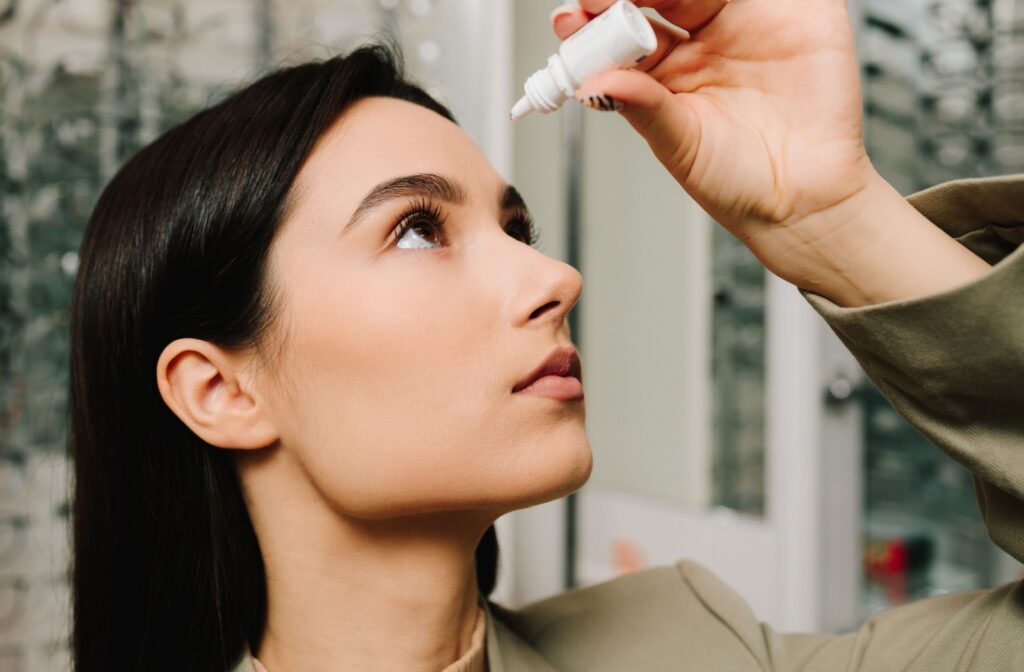
You know that gritty, tired, or blurry sensation in your eyes—especially after a long day in front of a screen. Dry eye symptoms can be a real distraction from your work and life, but the team at Dr. Rehana Manji & Associates knows that finding relief doesn’t have to be a complicated process. It starts with a simple idea.
The “best” eye drop is the one that effectively targets the specific cause of your discomfort. By exploring your options and the causes of your dry eye symptoms, you can find a path back to comfortable, clear vision.
Find the Cause of Your Dry Eye Symptoms
Before you can find the right solution, it helps to know what might be causing the problem. Dry eye happens when your eyes don’t produce enough tears or when your tears evaporate too quickly. It may be related to your health, environment, and daily habits, all of which can affect the stability of your tear film.
Common Symptoms You Might Notice
- A scratchy or sandy feeling, like something is in your eye
- Stinging or burning sensations
- Redness and irritation
- Periods of watery eyes, followed by a feeling of dryness
- Blurry vision, especially after reading or computer use
Why Your Eyes Might Feel Dry
- Extended time in front of screens, which can lead to digital eye strain
- Dry air from air conditioning or heating systems
- Wearing contact lenses
- A change in the quality or quantity of your tears
Types of Eye Drops & How They Work
The eye drop aisle can seem endless, but most products fall into a few main categories. Each type is made to help with a different aspect of dry eye. Knowing the difference is the first step toward finding relief that works for you.
Artificial Tears for Added Moisture
These are the most common types of over-the-counter drops. They work by adding moisture to the surface of your eye, much like your natural tears. They are designed to give you comfortable, temporary relief from general dryness.
Gels & Ointments for Longer Relief
If you need lasting relief, these thicker formulas can help. Their gel-like texture stays on the surface of your eye longer, providing lasting lubrication. Because they can cause temporary blurriness, many people find them most effective when used just before bed.
Lipid-Based Drops for Tear Stability
Sometimes, the issue isn’t a lack of tears—it’s that they disappear too fast. This often happens when the oily layer of your tear film, produced by tiny glands in your eyelids, is out of balance. Lipid-based drops help restore this protective layer, which keeps your tears in place.
How to Choose an Eye Drop That Works for You
With so many options, how do you pick just one? Your choice often depends on how often you need relief, how sensitive your eyes are, and whether you wear contact lenses. There are a couple of key factors to keep in mind when you are deciding what to try.
Consider Your Symptoms & Lifestyle
If you experience dryness only after long hours at the computer, a standard artificial tear may be sufficient. If your eyes feel dry as soon as you wake up, a thicker gel used at night may be a good choice.

Preservatives vs. Preservative-Free
Many eye drops contain preservatives to prevent contamination after the bottle is opened. For occasional use, this is generally fine. However, if you need to use drops more than four times a day, a preservative-free option may be a better choice, as some preservatives can cause irritation with frequent application. Always follow safe practices for eye care products.
When Over-the-Counter Drops Are Not Enough
Sometimes, the relief you get from store-bought drops is only temporary. If you find yourself reaching for them constantly or your symptoms never seem to go away, it might be time for a different approach. Persistent dry eye may indicate an underlying issue that warrants further review.
Signs You Need a Professional Opinion
- Your symptoms continue or worsen despite using drops
- You need to apply drops many times an hour to feel comfortable
- You experience eye pain or significant changes in your vision
Innovative Dry Eye Treatments
If over-the-counter options aren’t enough, other solutions are available. A comprehensive eye exam with an Optometrist in Liberty Village can help determine the root of your dry eye. The team can then recommend personalized treatments, which may include prescription drops or in-office procedures.
Tips for Relief Beyond Just Eye Drops
While eye drops are a great tool, a few simple changes to your daily routine can also make a big difference. Supporting your eye health with good habits can help reduce dryness and improve your overall comfort.
Simple Habits for More Comfortable Eyes
- Follow the 20-20-20 rule: Every 20 minutes, look at something 20 feet away for at least 20 seconds.
- Stay hydrated: Drinking enough water throughout the day supports your body’s functions, including tear production.
- Blink more often: When you focus on a screen, you tend to blink less. Make a conscious effort to blink fully and frequently.
- Consider a humidifier: Adding moisture to the air in your home or office can help reduce tear evaporation.
The Role of a Comprehensive Eye Exam
Your eyes and vision are precious, and you deserve to feel comfortable. A visit with your optometrist in Liberty Village can help create a customized plan to bring you lasting relief from dry eye symptoms. An eye exam does more than just check your prescription—it is an important look at your overall eye health. The team at Dr. Rehana Manji & Associates takes the time to listen to your concerns and find a solution that fits your life. To get to the bottom of your dry eye symptoms and find lasting relief, book an appointment today.