


You’re focused on a project at work, and suddenly the words on your screen start to look fuzzy. You blink a few times, and things seem to clear up, but the blurriness soon returns. This frustrating cycle can make it hard to concentrate and be productive during your workday.
If this sounds familiar, you might be surprised to learn what’s causing it. Yes, dry eyes can cause blurry vision. A healthy layer of tears is important for keeping your vision sharp and comfortable. When this layer is disrupted, dry eye is often the result.
While dry eye can often be managed at home, persistent or disruptive dry eye may require a visit to your optometrist.
The Link Between Your Tears & Clear Vision
When your eyes are dry, you might notice bouts of blurry vision. A healthy tear film lubricates your eyes, but when your tear film becomes unstable, the dry, bumpy surface of your eye may cause incoming light to scatter, resulting in your vision becoming blurry.
Blurry vision linked to dry eye is often distinguished by the fact that it can be cleared up temporarily by blinking. This is because blinking serves to refresh your tear film, making the surface of your eye smooth again.
Why Young Professionals Often Experience Dry Eyes
Our environment and daily habits play a big role in our eye health. Many parts of a typical workday can contribute to the symptoms of dry eye. From the air you breathe to the screens you view, your eyes are constantly navigating different challenges.
Digital Screens & Reduced Blink Rate
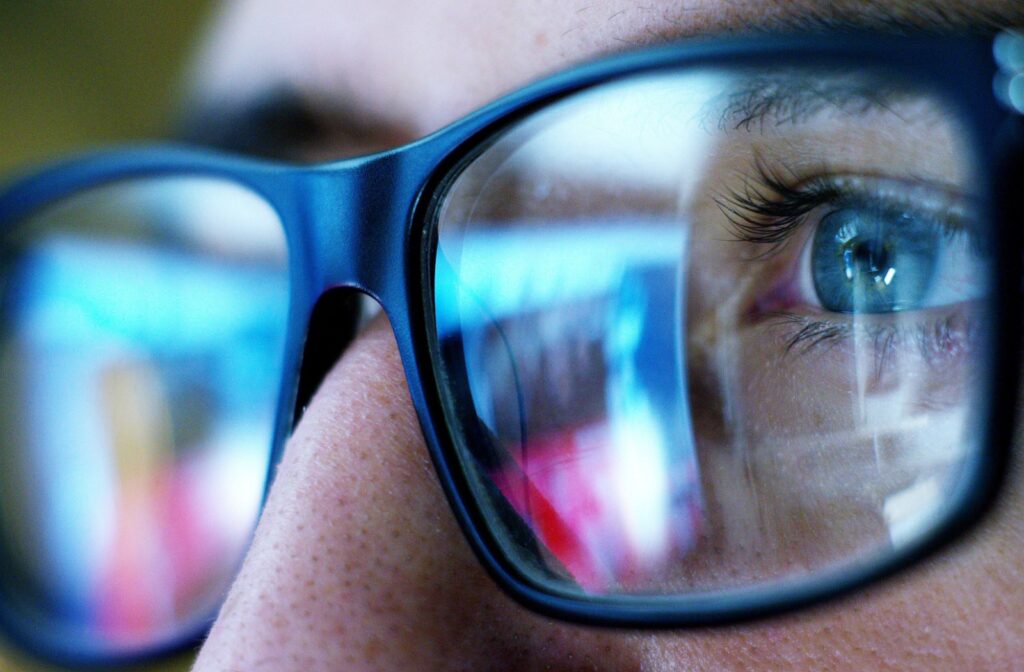
When you stare at a computer or phone, you tend to blink less. But blinking is how your body spreads fresh tears across your eyes in order to keep them moist and clean. The reduced blinking rate during screen use means that your eyes are more likely to become dry and irritated.
Office Environments & Air Quality
Offices with air conditioning or central heat often have very dry air. This can cause the tears to evaporate from your eyes more quickly than usual. This constant exposure to dry air can lead to discomfort, redness, and blurriness.
Signs Your Blurry Vision Comes From Dry Eyes
If your blurry vision is related to dry eye, you may also experience other dry eye symptoms. Here’s what to look for:
- A scratchy or sandy feel, like something is in your eye
- Stinging or burning sensations
- Redness in the white part of your eyes
- Watery eyes, which is the body’s response to the irritation of dry eyes
- Vision that clears up when you blink
How Long Does Blurriness From Dry Eyes Last?
The blurriness caused by dry eye is often temporary, and it can come and go throughout the day. It might get worse with prolonged screen time and improve with rest or when you apply eye drops.
If your blurry vision is constant, it’s a good idea to have your eyes checked to rule out other issues.
How to Manage Dry Eyes & Blurry Vision
You can take simple steps to relieve discomfort and improve your vision. Small changes to your routine can make a big difference in how your eyes feel. For persistent issues, a professional can offer more specific advice and personalized care.
Simple At-Home Relief Strategies
- Follow the 20-20-20 rule—every 20 minutes, look at something 20 feet away for 20 seconds.
- Use a humidifier at your desk or at home to add moisture to the air.
- Stay hydrated by drinking plenty of water throughout the day to support overall health.
What Eye Drops Can Help?
Artificial tears or lubricating eye drops can provide temporary relief by supplementing your natural tear film. These drops help add moisture back to the eye’s surface. Look for preservative-free options if you need to use them more than four times a day, as they’re often gentler on your eyes.
When to See an Optometrist in Liberty Village
If at-home care doesn’t help or your symptoms get worse, it’s a good idea to schedule an appointment. As your optometrist in Liberty Village, we can assess your eyes to find the cause of your dryness. From there, we can recommend a personalized plan to help you find lasting relief.
Eye Exam Coverage for Adults in Ontario
Many young professionals wonder if their eye care is covered. In Ontario, OHIP coverage for eye exams depends on your age and certain medical conditions. Understanding your coverage can help you plan for your eye health needs.
What OHIP Covers for Ages 20 to 64
For adults in this age group, OHIP does not typically cover routine eye exams. You must pay for these appointments yourself or through a private insurance plan.
Medical Conditions That Qualify for Coverage
OHIP may cover one major eye exam every 12 months if you have an eligible medical condition, such as:
- Diabetes
- Glaucoma
- Cataracts that impact your vision
- Retinal or corneal disease
- Uveitis
Use Private Insurance for Routine Eye Exams
If you don’t have a qualifying medical condition, private health insurance from your workplace can help pay for routine eye exams. These plans often include a set amount for vision care expenses. This makes it easier to visit your optometrist for regular check-ups and maintain your eye health.
Protect Your Vision
Your eyes and vision are precious, and conditions like digital eye strain and dry eye can affect not only your vision but your comfort as well. At Dr. Rehana Manji & Associates, our team will work with you to determine your needs and recommend treatment options to help you find relief. Book an appointment with us today—we’re here to help you see clearly and comfortably.